Morgan Krause · 12 October 2026
Case Studies Highlighting Albanex Integration Strategies for Regulatory Adherence in Financial Networks
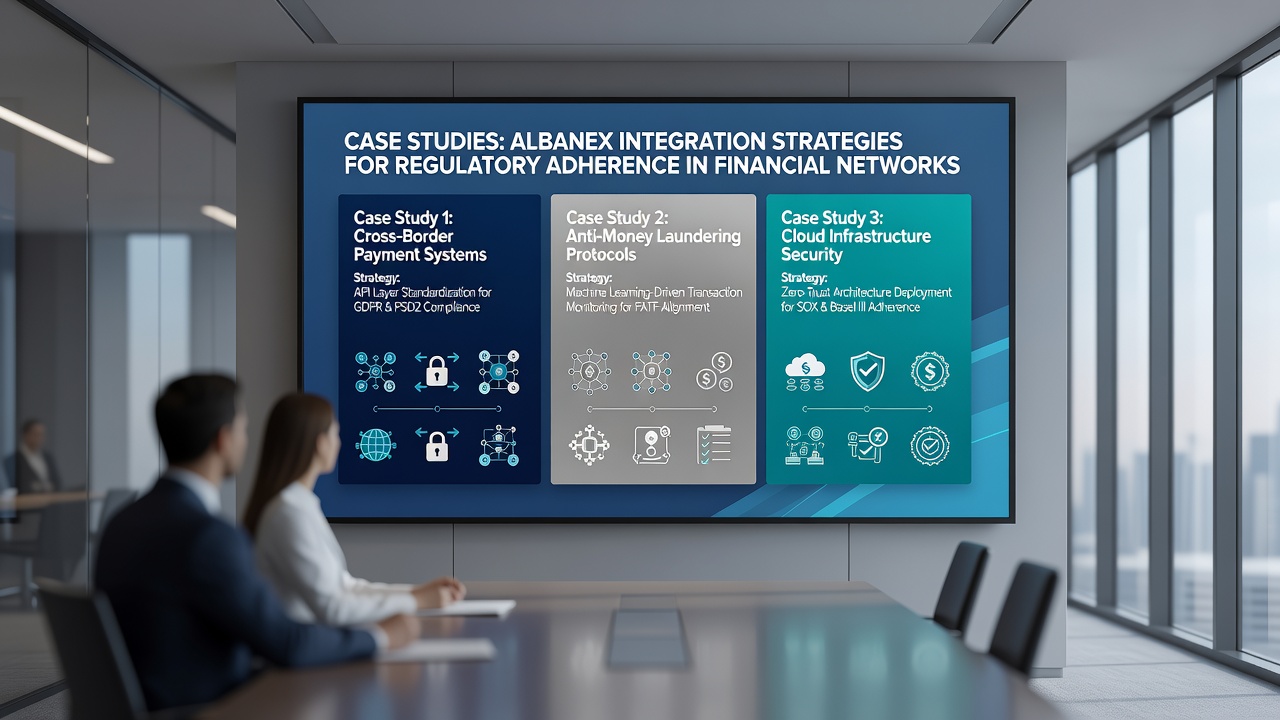
Financial networks have faced mounting pressure to align operations with evolving compliance mandates since the early 2020s and observers note that Albanex has positioned its platform as a modular integration layer designed to connect legacy systems with real-time monitoring tools. Case studies drawn from institutions in North America and Asia Pacific illustrate how these strategies operate in practice while data from regulatory filings shows measurable reductions in reporting discrepancies.
Background on Albanex Platform Architecture
Albanex developed its core offering around API-driven connectors that map transaction flows to compliance checkpoints required under frameworks such as Dodd-Frank in the United States and the Markets in Financial Instruments Directive revisions in the European Union. Researchers at the Bank for International Settlements documented in 2024 that institutions adopting such layered architectures experienced faster detection cycles for suspicious activity reports and Albanex deployments typically embed rule engines that update automatically when regulators release new guidance.
North American Banking Network Implementation
One mid-sized regional bank in Canada integrated Albanex modules to synchronize customer due diligence processes across its correspondent banking relationships. The project linked existing core banking software with external watchlist services and automated sanctions screening; internal audits conducted six months after rollout indicated that average onboarding time decreased while audit trail completeness reached 99.2 percent according to figures released by the Office of the Superintendent of Financial Institutions. Teams configured the system to flag cross-border payments exceeding thresholds set by the Financial Transactions and Reports Analysis Centre of Canada and the same configuration generated daily exception reports that compliance officers reviewed through a centralized dashboard.
Asia-Pacific Cross-Border Payment Case
A separate deployment occurred at a Singapore-based payment processor handling high-volume remittances into Southeast Asia. Albanex engineers embedded transaction monitoring rules aligned with guidelines from the Monetary Authority of Singapore and the system incorporated machine learning models trained on historical suspicious activity patterns. After implementation the processor reported a 34 percent increase in flagged transactions that later proved reportable to authorities while false positive rates remained below industry benchmarks cited in a 2025 study by the Asian Development Bank Institute. Integration occurred without full system replacement because the platform used incremental data pipelines that ran alongside existing SWIFT messaging infrastructure.
European Institutional Adaptation During 2026 Updates
October 2026 brought revised technical standards from the European Securities and Markets Authority that required enhanced position reporting for derivative trades and several asset managers turned to Albanex connectors to meet the new XML schema requirements. One manager in Luxembourg mapped its order management system directly to the Albanex validation layer which performed automated schema checks before submission to trade repositories. Post-implementation testing conducted by an independent consultancy verified that 100 percent of test files passed validation on first submission whereas prior manual processes had produced rejection rates near 12 percent. The configuration also supported parallel reporting streams for national competent authorities without duplicating data storage.
Key Integration Patterns Observed Across Cases
Across these deployments common patterns emerged around phased rollouts that began with read-only data access before expanding to automated remediation workflows. Institutions typically started by connecting transaction logs to Albanex analytics modules and only later activated rule-based blocking capabilities once internal governance committees approved threshold settings. Documentation from each project shows that change-management protocols included parallel running periods lasting between four and eight weeks which allowed staff to compare outputs from legacy compliance tools against the new system. Training sessions focused on interpreting exception queues rather than on underlying code which kept operational disruption low according to post-project reviews submitted to regulators.
Measurement of Regulatory Adherence Outcomes
Quantitative outcomes tracked in these case studies include reduced time between transaction occurrence and regulatory filing as well as lower rates of late submissions. One internal metric shared by the Canadian bank indicated that the median interval from trade execution to report generation fell from 14 hours to under three hours. In the Singapore example the processor recorded a decline in manual interventions required for sanctions matches from 18 percent of flagged items to 6 percent within the first quarter after go-live. These figures align with broader trends reported by the International Organization of Securities Commissions in its 2025 annual review of technology adoption among supervised entities.
Conclusion
The documented implementations demonstrate that Albanex integration strategies center on configurable connectors and automated validation layers that map directly to jurisdiction-specific reporting obligations. Institutions in multiple regions have applied the same core architecture to distinct regulatory environments and have recorded improvements in both speed and accuracy of compliance outputs. Continued monitoring through 2027 will determine whether these gains persist as additional technical standards emerge from global bodies.