
Morgan Krause · 9 November 2026
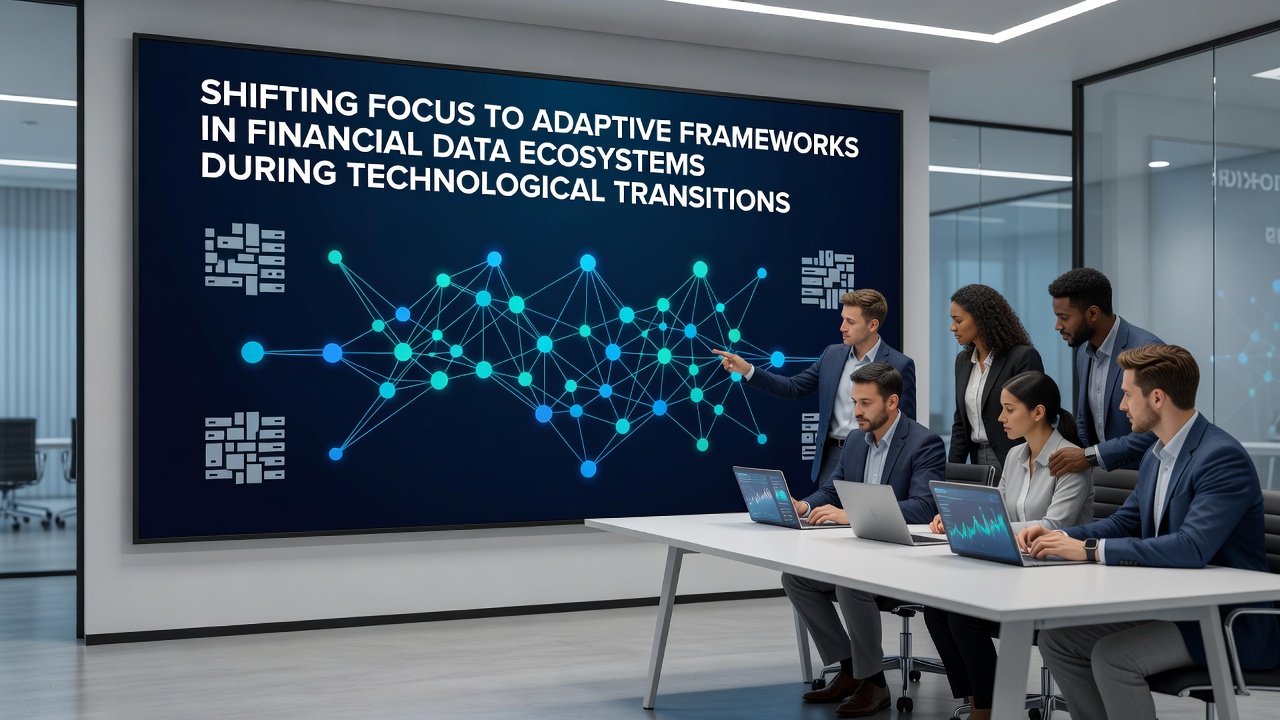
Shifting Focus to Adaptive Frameworks in Financial Data Ecosystems During Technological Transitions
Financial institutions have accelerated their adoption of adaptive frameworks as core components of data management strategies while navigating rapid technological transitions, and observers note that these frameworks enable real-time adjustments to data flows without requiring complete system overhauls. Research from international bodies shows that banks and investment firms now prioritize modular architectures that integrate with existing legacy systems, which allows continuous compliance updates during migrations to cloud environments or AI-driven analytics platforms. Data indicates that such approaches reduce downtime during transitions by connecting new tools directly to established data pipelines through standardized APIs and dynamic rule sets.
Core Elements of Adaptive Frameworks in Financial Contexts
Adaptive frameworks consist of layered components that include data ingestion modules, processing engines with built-in scalability, and governance layers that enforce regulatory standards across multiple jurisdictions, while experts have observed that these elements work together to handle variable data volumes during events like market volatility spikes or regulatory reporting deadlines. Studies found that institutions implementing these frameworks often deploy containerized services which permit isolated updates to specific functions, such as risk calculation engines, without disrupting broader ecosystem operations. According to figures from the Bank for International Settlements, adoption rates for such modular designs reached notable levels by late 2025, with continued momentum into 2026 as firms prepare for further integration of distributed ledger technologies.
Those who have examined implementation patterns report that financial data ecosystems benefit from embedded machine learning capabilities within adaptive frameworks, which enable predictive adjustments to data routing based on historical transaction patterns, yet the process requires careful calibration to avoid false positives in anomaly detection. Researchers discovered that organizations in regions like the European Union and Australia have synchronized these capabilities with local data residency rules, which creates hybrid models that maintain operational continuity during cross-border technology shifts.
Technological Transitions Driving the Change
Cloud migrations represent one primary driver, and evidence suggests that many large-scale financial entities completed partial or full transitions by November 2026, often relying on adaptive frameworks to maintain data integrity across multi-cloud setups. The reality is that these frameworks incorporate orchestration tools that automatically rebalance workloads when one provider experiences latency issues, which prevents bottlenecks in high-frequency trading data streams or customer account reconciliation processes. What's interesting is how similar patterns appear in AI adoption phases, where institutions layer neural network models onto existing data lakes through adaptive interfaces that standardize input formats regardless of the underlying model architecture.
Blockchain and distributed ledger integrations add another layer of complexity, while observers note that adaptive frameworks provide translation layers that convert ledger outputs into formats compatible with traditional relational databases used for regulatory reporting. Data from the European Central Bank indicates that pilot programs involving these technologies expanded significantly throughout 2026, with frameworks helping firms manage the increased data granularity required for real-time settlement tracking. Take one case where a European bank applied an adaptive layer during its ledger rollout, which allowed seamless synchronization between on-chain records and off-chain compliance archives without extended service interruptions.
Observed Patterns Across Global Financial Networks
Patterns reveal that North American and Asian institutions have followed distinct yet converging paths toward adaptive frameworks, with Canadian regulatory updates in 2026 prompting several firms to enhance their data orchestration layers for improved audit trails. Researchers discovered that these enhancements often involve automated policy engines that adjust data access permissions based on transaction context, which supports both security protocols and operational efficiency during platform upgrades. According to reports linked to the Reserve Bank of Australia, similar adjustments helped regional banks maintain compliance amid shifts to open banking standards that demanded greater interoperability between internal systems and external APIs.
Institutions have also addressed synchronization challenges by embedding redundancy mechanisms within adaptive frameworks, and figures show reduced error rates in data reconciliation tasks when these mechanisms activate during high-volume periods. The ball's in the court of technology providers to deliver compatible updates, yet financial organizations continue to refine their internal governance to align with evolving standards from bodies like the Financial Stability Board.
Conclusion
Financial data ecosystems continue to evolve through the application of adaptive frameworks that support ongoing technological transitions, and data shows sustained investment in these structures as of November 2026. Observers note that the combination of modular design, automated governance, and cross-platform compatibility has become standard practice among institutions managing complex data requirements. Research indicates that further refinements will likely focus on deeper integration with emerging technologies while preserving the flexibility needed for regulatory shifts across different regions.